Wednesday, March 13, 2013

Week 4 of Lent

Some days, it feels like Lent is flying by and we'll be at Palm Sunday, Holy Week and Easter in the blink of an eye. (insert banned A word here) Other days, the long hours stretch interminably and it feels like we will remain in the dark woods forever.

Shadow 

No
Jesus' "no" becomes our "no." From Daniel Erlander's "Baptized We Live"


Find
How can we make it easier for people to "find" their way through and follow our liturgy?


Faithful 
What symbols do we use to show how we are "faithful" or tell Christ's story?
 

Ate
What is my daily bread? How much is enough? And whose bowls are empty? How do I share?
 

Happy 
No single image could capture happiness for me, but the folks at Rethink Church included this version of Psalm 32:1-2 The Message on its blog for "happy".
 
Count yourself lucky, how happy you must be—
you get a fresh start,
your slate’s wiped clean.
Count yourself lucky—
God holds nothing against you
and you’re holding nothing back from God. 


Silence
One image that came to mind for silence is from the woods, specifically, from being on the Appalachian Trail in Harpers Ferry for the first time on President's Day in 2001. But even the woods are not silent. We hear the rhythm of our breath, which John Wesley described as prayer.  God breathes into us the divine word and will; we respond in prayer by breathing out our responses in both word and deed.

Water
Martin Luther writes in the Small Catechism, "Baptism is not simply plain water. It is water enclosed in God's command & connected w/ God's Word."


Tuesday, March 5, 2013

Week 3 of Lent

As we move into the second half of Lent, have you discovered practices, prayers or disciplines that have opened your eyes to seeing God in the world around you? Have you changed how you approach God yourself? What have you been learning?

I have discovered that while I use a rich vocabulary of words in much of what I do, sometimes I live in a visual desert, or at least, its distinctiveness is blurred in its familiarity. I wonder how my reflections would change if I lived in  more urban setting, or if I was in more varied spaces every day instead of following my routine of home, desk, sanctuary, highway and home again. And then I find myself convicted: Living in the midst of the familiar (and the comfortable), how much more important is it then that I stop and pay attention to the world around me, to notice where I see God active and vibrant?

Hear

The organ resonates, the trumpets call, the choral voices are raised singing, "Hosanna!"


Earthly
"If God so clothes..." all kinds of "earthly" things, will God not also clothe us? (Mt. 6:30)


Prophet
Who are our "prophets" today? Martin Luther King, Jr. certainly has been named. Mother Theresa probably, too. Theologian Walter Brueggemann writes about prophetic imagination and how we preachers can speak prophetically when we bring the Word to our congregations. I wrestled with an image for this word because I resisted using the image of someone renowned, and kept wondering, "Who are the prophets in my life?" and "What does it mean to be a prophet today?" What are the hard truths we need to hear?

Leave
The story of Jesus delivering a boy from a demon in Luke 9:35-43 is the Scripture the folks at Rethink Church chose for this word. The disciples and Jesus had just left a mountaintop experience, and confronted by the world waiting for them, Jesus drove out the evil. What do we leave when we go out of our sanctuaries? Are we able, on the strength of our witness, to drive out, or expel, evil from our communities? Is that the power of communion, community bound together by Christ?

Thirst
Is our "thirst" for God felt more keenly than our craving for the next cup of dark roast?


Bless
"Bless, O Lord, this food to our use and us to Thy loving service." That was my childhood table grace, and it's one of one hundred graces in this volume, which a seminary friend shared with me several years ago.


Night
Remembering that even in the darkness, God is here with me, with us.

Friday, March 1, 2013

Week 2 of Lent

Week 2 of the "Photo-a-Day" challenge created by Rethink Church challenged us to look at these words:

Evil
Defined for many by the events of September 11, 2001, evil was made visible in the events of that day, as well as others before it and since, whenever we have cried "never again". This photo is from TIME Pictures:


Love
While, undoubtedly, the context for speaking of love during Lent is the inexhaustible love of God for us, the picture was what still comes to mind first for me: one from our wedding day in 1993.


Spirit
The Spirit of God is ever in the wind or the whisper. Many images I saw on the day of this word were of cemeteries, recalling the spirits of all the saints who have gone before us. This glass sculpture was in my grandparents' dining room during their lifetimes, and if you squint, you can almost see the branches sway.


Live
Daily, we're reminded to live life fully because it is a gift. With my family, I try to live with laughter and joy.


Cover
Last Sunday's Gospel text (Luke 13:31-35) spoke of the mother hen covering her brood, protecting them from the assault of the world around them. This image is from a chapel above Jerusalem that tradition says is where Jesus proclaimed his lament over the city. (Mt. 23:37)


For the rest of the week's reflections on "Vision" and "Lift", I have to rely on the Pinterest images collected by the folks at Rethink Church. The daily text and blog post give a short introduction to where they've drawn the word from, and sometimes, I read that before I find an image, while other times, I don't read it until later, and it's fun to see where our thoughts diverged.

What are you seeing differently this Lent?

Wednesday, February 20, 2013

Opening My Eyes During Lent

For Lent, part of my practice is participating in a "Photo-a-Day" challenge created by Rethink Church, sponsored by the United Methodist Church.  Rethink Church posts a blog every day with a longer narrative and Scripture to fully explain the theme, and, with lots of other folks, I take a photo that, for me, reflects the theme for the day. Using the lens of the day's word, I am asking every day, "Where do I see God in my life today? 

Here are the ones I posted during the first week:

Who Am I
A child of God, a wife, mother, student.

Return
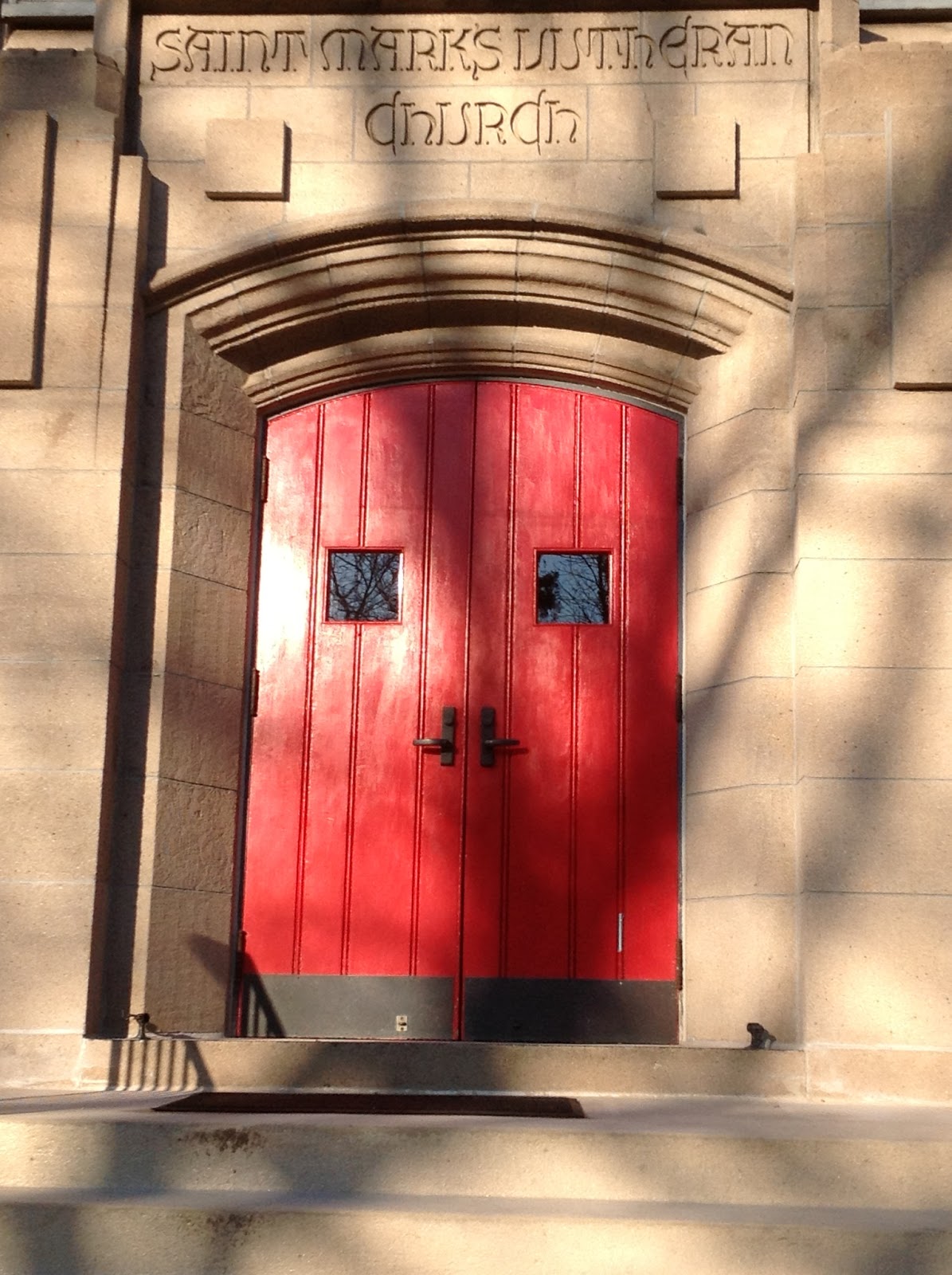
Does returning to God mean returning to God through the red doors? What are alternatives?

See         Injustice
No image for these two days because the days' work got in the way, but  the reflection of where I "see injustice" is found in the bus stops on the south end of town, where the jobs are, but the buses don't run on Sundays. Can we open our eyes to see the ways people with less privilege than we have experience life?

Settle
To where have I followed God (Va., Pa., W.Va., NC, MN) and to where is God calling me next?

World
We cannot experience the world through packages; we have to meet living, breathing people.


Wonder
I expressed wonder that "What you see depends largely on where you sit." The axiom is true in life, as well as in art. This photo of a window in Duke Chapel was posted on their Facebook page.


Want to try it? Visit Rethink Church. You can get daily reminders via email, share on Twitter with #rethinkchurch and #40days, post photos on their Facebook wall or on their Pinterest. There are lots of ways to connect, and more importantly, to be in conversation with others who are listening for God in their lives every day, too.

Monday, February 11, 2013

Fingerpainting

Someone once said that when I was small I liked to finger-paint with brushes so I wouldn't get messy. Lent - a season of fasting, repentance and prayer - begins on Wednesday, and I'll be content using my fingers to paint crosses onto the foreheads of people who come to my internship congregation for the Imposition of the Ashes.

As we prepare to follow Christ to the cross, people are marking the season and reflecting on its meaning in varied and awe-inspiring ways. Here are some of my favorites. What are you doing?

(1) On her blog, Worshiping with Children, Carolyn Brown offers 3 Reasons to Include Children in Ash Wednesday but what really captured my imagination was this photo from Blue Ridge Presbyterian Church where the table covering was signed with crosses by worshipers of all ages. It's a palpable way for the people of God to participate as the priesthood of all believers, and to demystify the imposition of ashes.


(2) Jan Richardson, who illustrates the lectionary texts in her Painted Prayerbook offered this reflection. For other reflections, blessings, and art for Ash Wednesday, also see Jan's posts The Memory of Ashes, Upon the Ashes (which features the indomitable Sojourner Truth), The Artful Ashes, and Ash Wednesday, Almost.

(3) House for All Sinners and Saints (HFASS) in Denver, founded by Rev. Nadia Bolz-Weber, offers their own take on 40 ways to make this a holy season.

(4) Rethink Church, sponsored by the United Methodist Church, has produced a gameplan for a photo-a-day challenge that asks us to be more attentive to the world around us and to notice where God is in these forty days.


(5) As part of their Vibrant Congregations Project, Luther Seminary professor David J. Lose collaborated with folks and edited Renew 52, a collection of short essays about revitalizing church. Download your free e-book for Kindle, iPad or Nook, or downlaod the .PDF file now.Spending time during Lent reading and thinking about the ideas they share opens my imagination for what is possible for our congregations.

Whatever you do, be intentional about this season. Maybe you aren't interested in finding a church on Wednesday, or because of your schedule, you can't get to a church. Don't be surprised if God shows up anyway.  Watch for ministers coming to the streets, bringing "Ashes To Go" to commuter rail stations, city street corners, placing an ashen cross on your forehead, and praying, "Remember that you are dust, and to dust you shall return."

Sunday, February 10, 2013

Alleluia, Voices Raise

Quickly, before we begin a season of fasting, repentance and prayer on Ash Wednesday this week, and bury the Alleluias until Easter morning, let me say, "Alleluia!" for rich and varied voices from the pulpit.

While I wasn't on the regular preaching schedule in January at my internship site, I preached at a chapel service and a funeral before traveling to St. Paul Minnesota for my final 2-week learning intensive on campus at Luther Seminary, and then resumed preaching with another chapel service before the month was finished. The sermon below was my first in St. Mark's since Christmas Eve when I told the story of The Littlest Angel by Charles Tazewell.

February 3, 2013
4th Sunday after the Epiphany (Year C)
Jeremiah 1:4-10Psalm 71:1-6
1 Corinthians 13:1-13
Luke 4:21-30

Listen Now

Having been welcomed so graciously into the pulpit at my home congregation, at the retirement community and again during internship, I am grateful for the opportunities I've been given to proclaim the Gospel in different settings and to different audiences. I'm also delighted when someone else is preaching because I get to hear their voices and interpretations of the text, and hear how they heard God's word for us. Throughout Lent and this 90th anniversary year for St. Mark's we are inviting former pastors and sons and daughters of the congregation to return to St. Mark's to preach - what a joy it will be to hear the Gospel from so many different voices. Recordings from St. Mark's are on the church's website.

Saturday, January 19, 2013

What’s your next Good Read?


Newspapers deliver news, and at least the hard news stories give us the facts that will become the stuff of history. Magazines tell us something about a subject we want to explore in more depth. Stories open our imagination to an alternate world. Poetry helps us engage all our senses. Nonfiction, like biographies and Wikis, teach us who people were and how things came to be, and what makes them work, answering the questions of “Who?”, “Why?” and “How?” that lay behind what we see happening in the world around us. The written word in its many different genres and forms shapes our understanding of ourselves and the world around us.

But, when we talk about reading the Bible, suddenly the written Word becomes more intimidating. We imagine that there is a “right” way, and consequently, a “Wrong” way, to read the Bible because its text is, after all, the Holy Scripture of Christianity. It stares at us weightily from our bookshelf, like Dostoevsky’s Crime and Punishment, Shakespeare’s Collected Works, or Carl Sandburg’s Abraham Lincoln’s War Years (which is actually 4 tomes). Challenging and intellectual and unfamiliar. And, there’s so much of it – 66 books, in fact! Or perhaps, someone has given us their version and their interpretation does nothing to recommend it to us. But suppose we do open it, or download and open a Bible app, depending on where is falls open or which translation we read, the language sounds awkward, repetitive and formal. And if we stay in the text, we run headlong into stories of deception, like the king killing the husband of the woman he lusted for, or violence, like the rape of the king’s daughter. With the number of heartbreaking and terrorizing stories in our neighborhoods and cities, why would you invite more? Why read the Bible?

The Bible tells us who God is. If you are curious about a culture or a language or a people, you go to Fodor’s or Lonely Planet and you read about it. So engage your curiosity, learn the language of God as it’s expressed in the Bible, discover the less known God than the one that you may have heard shouted through a bullhorn, and meet God. God is a creator, an active, vibrant, attentive God who gets angry, who grieves, and who rejoices. God’s character is expressed in many names for God that identify particular aspects, or point us to specific promises that God has made. In the same way that a biography might give you glimpses into a person, the stories of the Bible reveal God’s character.

The Bible describes the covenant or relationship that God made and what promises are part of that. God designs us to be in relationship with each other and with God’s own self. This relationship is the ground for our understanding of who we are as community and what it means to be called into life together. Learning the promises of God helps us know how we can live into the hope of those promises and how one faithful response to those promises is to be in relationship with our neighbors and the world around us.

The Bible tells us how ancient Israel - the ancestors of Christian faith - understood God and what was important to shaping their tradition. Jesus was born in Israel and practiced Judaism. The stories he was taught and the instruction or Torah he was given are the foundation for his own teaching and ministry in the world where he lived. Reading the Bible opens his world to us and connects us to a story that is thousands of years old.

The Bible shows us what a follower of Jesus looks like.  It doesn’t prescribe what Jesus’ followers look like, and it doesn’t issue a secret handshake, or uniforms or nametags, but it talks about the people who traveled with Jesus during his ministry and those who witnessed his teaching and his miracles, his death and his resurrection. While we don’t always resemble followers of Jesus too closely, these stories provide us with a plumb line, so we know what true discipleship looks like.

The Bible is not an archival document that serves us better by kept under glass or locked away in pristine condition; neither is it written to sit unopened and gathering dust. It is a Living Word that invites us into its stories, asks us to listen to the stories of the arrogant little brother whose siblings trade him in, the man who wrestles God in the desert, the stories of betrayal and injustice righted. It invites us to walk alongside the Psalm writer who cries out in pain and provides us for a place to go when we are worn out, too. It invites us into the anticipation in the air at Elizabeth’s house when Mary, mother of Jesus, comes to see her during her pregnancy. It invites us into the courtyard where the disciple Peter lives out the struggle to tell people about Jesus and filled with fear and shame, denies him three times. It invites us to see how God uses unexpected people in unexpected places and in unexpected ways to share the Word of God’s love and forgiveness with the world.

When we read or listen to the stories we can begin to recognize God’s activity in each one, and we can begin to imagine how those stories from thousands of years ago are played out in our lives, and then, we can begin to see how our lives and stories connect and intersect with the biblical narrative, the story told through the texts of the books of the Bible. Like any good story, whether it’s your favorite movie or t.v. show, every new hearing, or reading, opens your eyes to see new details and prompts you to ask new questions.

As you read, or listen to it, the stories become more familiar until you can begin to complete the narrative from memory and the language seeps into your own vocabulary. And you learn how the books were written and why some were chosen to be held together in one collection as the canon; what is factual and what is allegorical; what is narrative and what is poetry; how a temple would have been constructed and what a Passover Seder meal may have looked like; you discover who the kings were, and what role the judges played, and you meet the men and women who were leaders in the early Christian church. And through all these different genres and forms, the Bible shapes our understanding of ourselves and the world around us. So perhaps it doesn’t need to be so unfamiliar or challenging, but instead inviting.

Pick one up and read!

For Android NRSV with Apocrypha (Free)

For IPad, IPhone or IPod Touch Accordance (Free)

Web NRSV on Oremus (Free)